
OSHA Heat Rule 2026: What Employers Actually Need to Comply With
There is no final federal OSHA heat standard yet. What exists is:
- A proposed rule stuck in regulatory limbo.
- An active National Emphasis Program that gives inspectors a green light to show up.
- The General Duty Clause, which OSHA is already using to cite employers today.
If you’re waiting for a firm deadline before building a heat safety plan, you’re playing a game you can’t win.
Here’s the breakdown of where things stand, what’s actually enforceable right now, and how to build a program that holds up no matter which way the rule swings.
Where the OSHA Heat Rule Stands in 2026
OSHA proposed ‘Heat Injury and Illness Prevention in Outdoor and Indoor Work Settings’ back in August 2024, publishing the official Notice of Proposed Rulemaking in the Federal Register. Public hearings wrapped up in mid-2025. The post-hearing comment period closed on October 30, 2025.
And then? Silence. No target date, no finalization, no signal that it’s a near-term priority for the current administration.
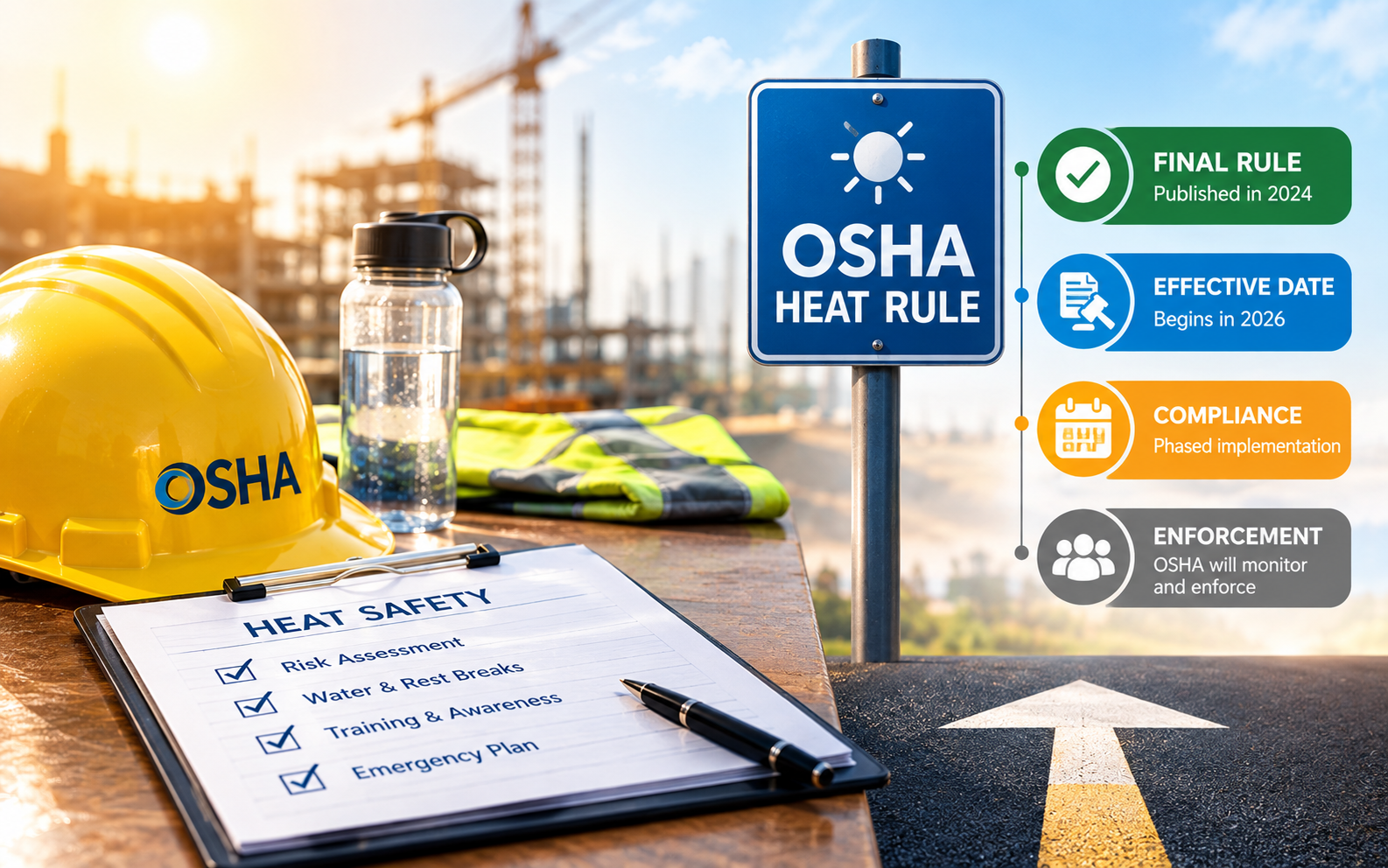
So, the OSHA heat rule 2026 isn’t some finished, enforceable heat stress standard at the moment. It might not even arrive this year. However, that doesn’t mean heat compliance is optional in the meantime.
What OSHA Can Enforce Right Now
Three things are doing the enforcement heavy lifting while the rule sits in limbo:
-
The General Duty Clause (Section 5(a)(1))
OSHA doesn’t need a heat-specific rule to cite you. If heat is a ‘recognized hazard’ in your workplace and you haven’t addressed it, you’re exposed.
-
The OSHA Heat National Emphasis Program (NEP)
NEP summed up: Heat inspections aren’t going anywhere. If anything, they’re getting broader, covering 55 targeted industries.
-
State-level heat standards
California, Washington, Oregon, Colorado, Nevada, and Maryland already have their own binding heat rules. If you operate across state lines, ‘we’re waiting on federal guidance’ won’t save you in a state that already has teeth
Employers who treat this as ‘nothing’s final, so nothing’s required’ are reading the situation backwards.
What the Proposed OSHA Heat Rule Would Require (If Finalized)
Even unfinished, the proposal is worth building toward. It mirrors what state rules and the General Duty Clause already reward. The following action items are proposed as per the heat index:
Initial Heat Trigger: 80°F
- Break areas
- Access to drinking water
- Acclimatization procedures for new/returning workers
High Heat Trigger: 90°F
- Mandatory paid 15-minute rest breaks every 2 hours
- Active monitoring for heat illness symptoms
The proposed OSHA heat index requirements apply to nearly every employer under OSHA’s jurisdiction, both indoor and outdoor. The only exceptions are work with very brief heat exposure and low risk.
In short, if your crew works in a warehouse without climate control or a job site under July sun, you’re in scope.
How to Build a Heat Injury and Illness Prevention Plan (HIIP)
Think of the Heat Injury and Illness Prevention Plan (HIIP) as your insurance policy against both today’s General Duty Clause citations and tomorrow’s final rule. It’s essentially the working version of an OSHA heat illness prevention plan.
A HIIP isn’t a PDF you write once and forget in a shared drive. It’s a living document that gets tested every summer. It needs to actually match what happens on your floor or job site, not just what sounds good in a policy binder. Here’s what a solid one actually contains:
1. Written Heat Safety Policy
Written policy naming who’s responsible for monitoring conditions and triggering protocols. Vague ownership is how heat plans fall apart. Someone specifically needs to own the decision to pull the trigger on breaks, not ‘the supervisor on duty, whoever that is.’
2. Heat Monitoring Procedures
WBGT meters, weather tracking, or heat index checks at the start of each shift. Cheap outdoor thermometers won’t cut it for indoor work with radiant heat sources (foundries, kitchens, laundry facilities). Those spaces need actual wet-bulb globe temperature readings, not a guess from the weather app.
3. Water, Rest, and Shade Access
Water, rest, and shade access to be built into the workday. That means:
- Cool water within a few minutes’ walk.
- Shaded or air-conditioned rest areas sized for your whole crew.
- Scheduled breaks that don’t require someone to ask permission first.
4. Acclimatization Protocols
These protocols apply to new hires and anyone returning after seven-plus days off. A worker’s body needs roughly one to two weeks of gradually increasing heat exposure to adjust, and skipping that ramp-up is one of the most common (and most preventable) causes of heat-related deaths on record.
5. Supervisor and Worker Training
Educate the on-ground staff about recognizing early symptoms: dizziness, confusion, stopped sweating, cramping. Training everyone once at onboarding isn’t enough. Refresh it annually, and make sure workers know they can call a break without fear of getting side-eyed for it.
6. Emergency Response Procedures
Who calls 911, who cools the worker down, and who documents the incident? Write down the exact cooling method (ice water immersion beats a garden hose), designate a point person per shift, and post the plan somewhere visible, not buried in an employee handbook nobody reads.
Skip any one of these, and your HIIP isn’t a program that protects people or holds up under an inspection. The employers who get burned aren’t usually the ones with no plan at all; they’re the ones with a plan that looks good on paper, but nobody actually follows when the mercury climbs.
How to Prepare for an OSHA Heat Inspection
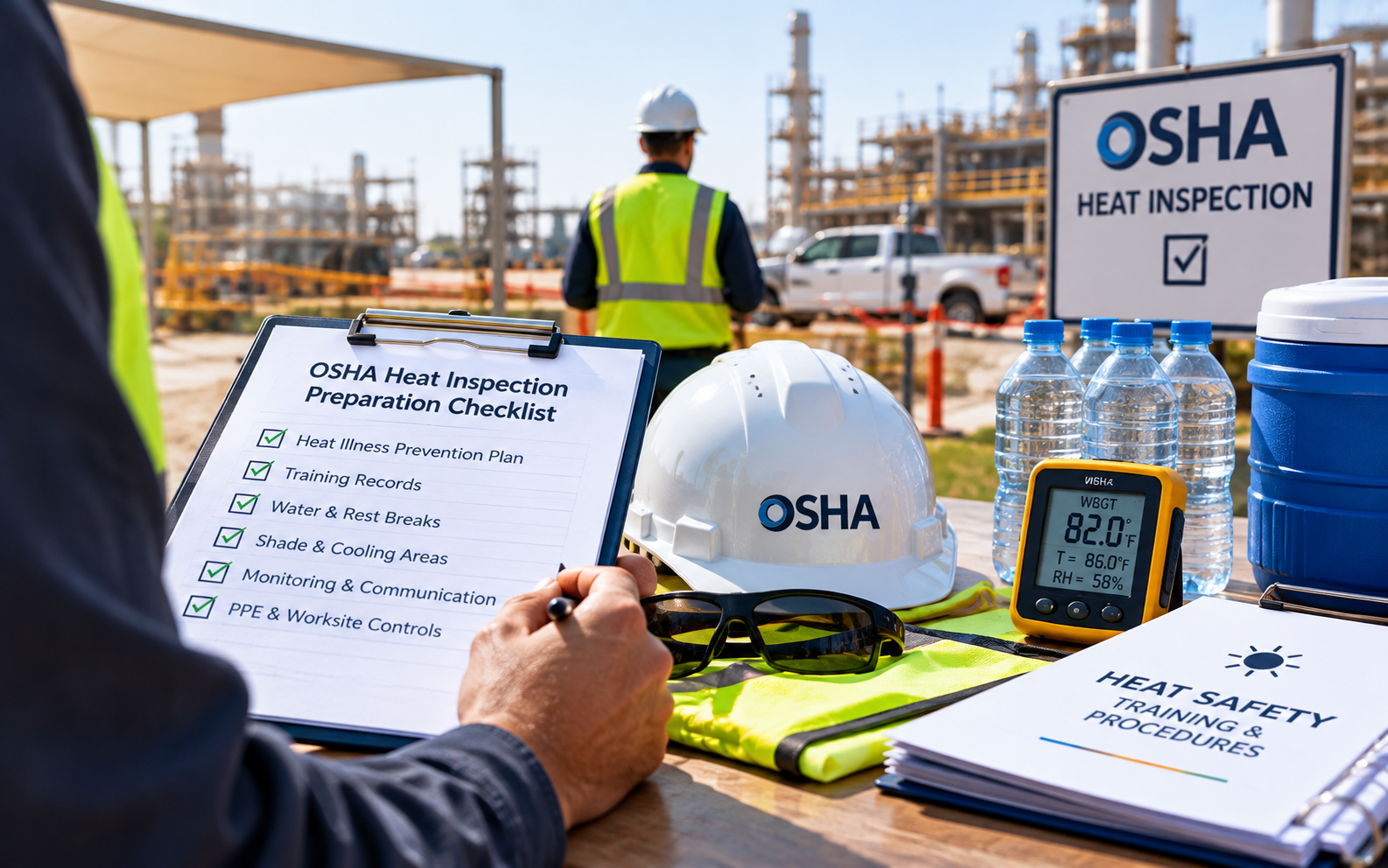
Under the current OSHA heat national emphasis program, inspectors don’t need a complaint to show up. They can conduct programmed inspections in targeted industries whenever conditions warrant it. A few things to have ready:
- Your written HIIP (or equivalent heat safety program), dated and signed.
- Training records showing employees and supervisors actually completed heat safety training.
- Monitoring logs of actual temperature/heat index readings.
- Incident records for any heat-related illness, including near-misses.
If an inspector asks ‘What happens when the heat index hits 90?’ and you have no clue, you’re in for a citation.
What Employers Should Do in 2026
Don’t wait on Washington to tell you it’s hot outside.
- Build your HIIP now, modelled on the proposed federal trigger points.
- Train supervisors to recognize heat illness symptoms before someone collapses on your watch.
- Check whether your state already has a binding standard. Many states already do, and ignorance isn’t an excuse.
- Keep monitoring records even though no federal rule mandates it yet. (It’s your best evidence of good faith under the General Duty Clause.)
- Revisit your plan each spring; heat season doesn’t wait for rulemaking to catch up.
The federal heat rule may be stuck in neutral, but enforcement isn’t. OSHA is already citing employers, inspectors are already showing up, and states aren’t waiting around either. Build the plan now. Not because a rule says so, but because a heat-stressed workforce is bad for people and worse for business.